
|
Jon NIcholls, Thomas Tallis School The sub-heading for this blog is "occasional musings about photography education". Since we haven't posted anything for over a year, this is something of an understatement. Nevertheless, a new academic year is fast approaching and I have what my wife refers to as "new satchel syndrome" and so here are a few thoughts about teaching. A brief health warning:
In my experience, when teachers (including me) begin the process of thinking about a new year, uppermost in their minds is what to teach. This might mean returning to successful schemes of work (those which excite students and seem to generate decent results). The more energetic and enterprising may begin to write lists of ideas, materials and processes for new projects (perhaps related to brilliant exhibitions or artists they discovered on their summer holidays). Some may even begin to tentatively sketch out new resources or even whole schemes of work. Most of us will be reflecting on the summer exam results and wondering what worked, what might need tweaking for the coming year and what needs consigning to the dustbin of history. I wonder how many teachers begin their planning for the new year thinking about ethics?
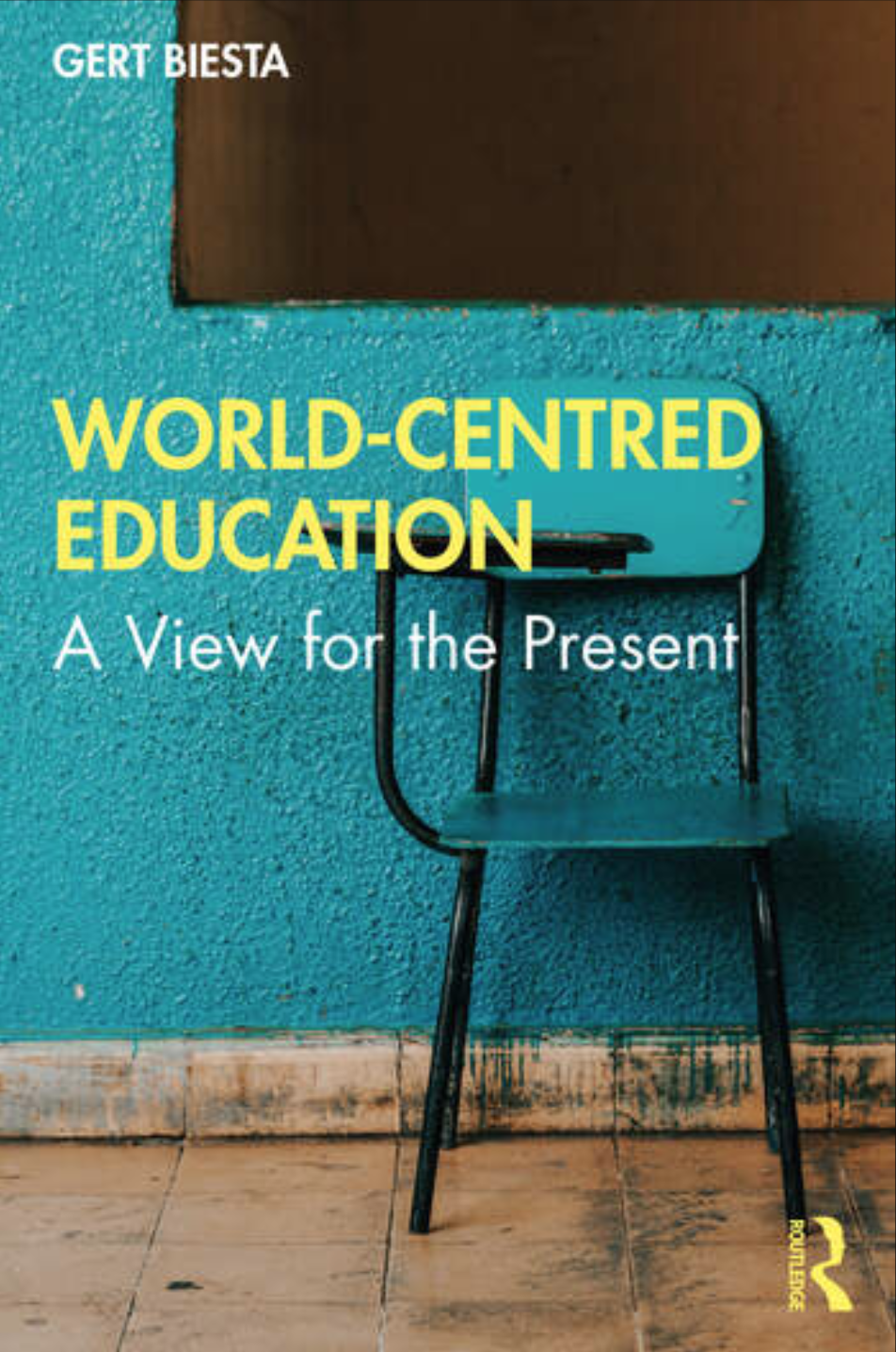
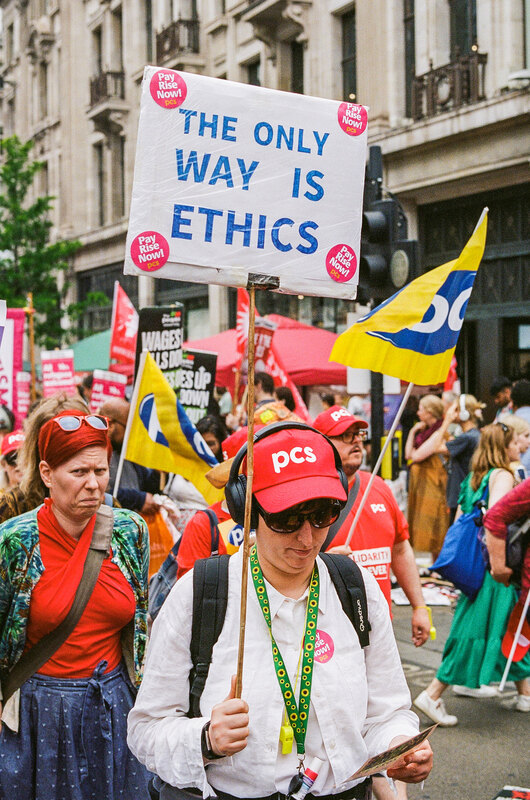
I took this picture on the recent TUC march in central London. There were loads of brilliant, hand-made signs. My favourite (which I failed to photograph) simply said: So many problems. So little cardboard! This one came a close second. It got me thinking (again) about the importance of ethics in education. So much of educational discourse is dominated by the "what works" agenda. There is so much pressure on teachers and leaders to 'produce' results that it's easy to lose sight of some fairly fundamental issues concerning the how (pedagogy) and the why (ethics) of education. I feel very fortunate to work in a local authority state comprehensive school which affords me a high level of professional autonomy. I have friends and colleagues in less fortunate circumstances. What, and to some extent how, they teach is very strictly policed. I am fully aware of my privileged position. Moreover my headteacher chaired a national commission which produced a Framework for Ethical Leadership in Education. But ethics isn't just for school leaders. I suppose what I'm suggesting is that all of us could spend a bit more time reflecting on the purposes of education. This is where the brilliant Biesta is so helpful. There's no substitute for reading Biesta's lucid, closely-argued but accessible texts. All I can hope to do is cherry-pick the bits that appeal to me and encourage you to seek out the rest for yourselves. There are some very good clips of him speaking on YouTube.
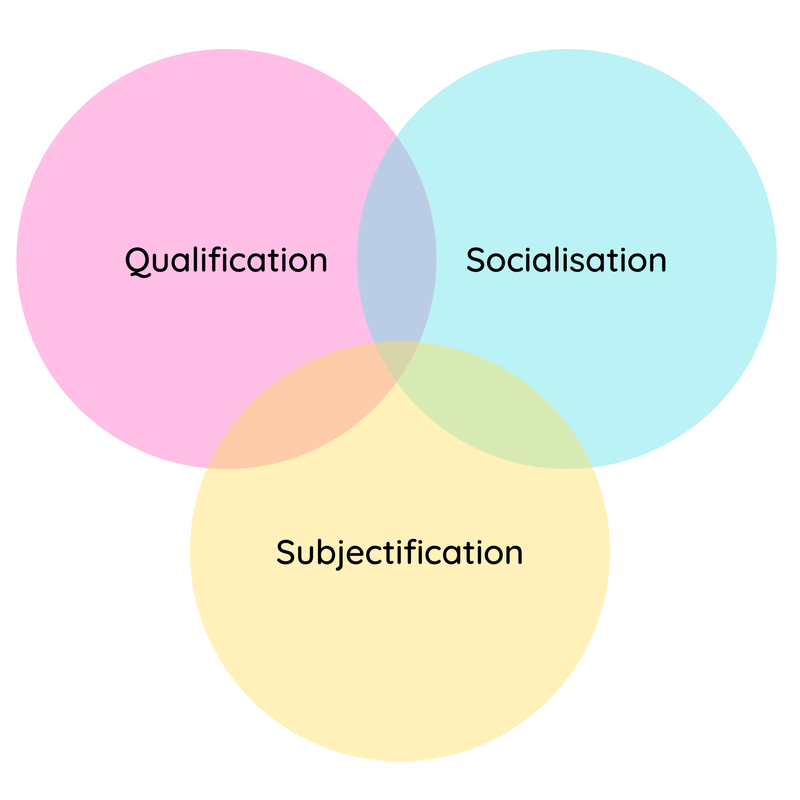
How much professional development time is taken up with discussions about either the curriculum, techniques for more effective dissemination of the curriculum (including how to support students with SEND), exam preparation and behaviour management? My guess would be approaching 100%. Biesta proposes that there are three domains of education: qualification, socialisation and subjectification (see diagram above). He argues that these domains ought to be kept in balance. My experience tells me that we spend a disproportionate amount of time considering issues related to qualification, less time thinking about socialisation and almost no time at all exploring subjectification. But what do these terms mean? Qualification - knowledge and skills (what students need to know and be able to do) Socialisation - cultures, traditions and practices (how we do things here) Subjectification - the freedom to act or refrain from acting as a person Subjectification is a tricky concept and one that seems (to me) to be less important in CPD planning and provision. Biesta offers this further explanation (my italics): This is not about freedom as a theoretical construct or complicated philosophical concept, but concerns the much more mundane experience that in many — perhaps even all — situations we encounter in our lives. We always have a possibility to say yes or to say no, to stay or to walk away, to go with the flow or to resist — and encountering this possibility in one's own life, particularly encountering it for the first time, is a very significant experience. Freedom viewed in this way is fundamentally an existential matter; it is about how we exist, how we lead our own lives, which of course no one else can do for us. Put differently, freedom is a first-person matter. It is about how I exist as the subject of my own life, not as the object of what other people want from me. Freedom hasn't always been considered a purpose of education. As we have moved from an aristocratic to a more democratic education system, we should remind ourselves that freedom has not always belonged to everyone. It used to exist to provide only the (already free) rich white men with the cultural resources to enjoy their privilege. With freedom in mind, Biesta wonders whether we devote enough energy to discussing the purposes of education. What matters. [...] perhaps we have lost a language to talk about these things, so that there is a need to rediscover and reclaim a different language for education and perhaps we have ended up in a system that prevents us from thinking and talking about what really matters in education? What should matter in education? What’s it all about? What's photography education all about?
No-one would deny that photography education should be concerned with knowledge, skills, cultures and traditions. But If we accept, for a moment, that education should also be oriented towards the freedom of the individual, what implications does that view have on our day-to-day practice in the classroom? And how might we engage our students in reflecting on the relationship between photography and (their) freedom? Tune in again soon (hopefully not as long as the last gap between blog posts!) for Part 2, in which I offer some thoughts on the subjectification of photography education.
8 Comments
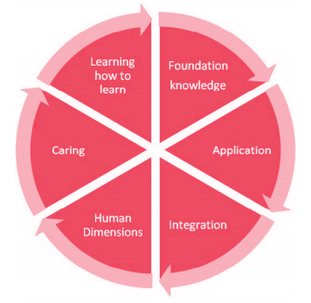 Recent discourse in UK education has been shaped, in part, by the place of the arts in the curriculum. Should STEM become STEAM? Should the arts be relegated to extra-curricular, so that the 'core' or EBacc subjects can be given pride of place? These questions go right to the heart of what is valued in education. Phrases like 'mastery curriculum' and 'powerful knowledge' tend to emphasise cognitive ability and epistemic access over other forms of intelligence. 'Traditional' subjects and disciplinary knowledge are back in vogue, admired for their perceived rigour and foundations in the Enlightenment values of logic and rationality. 'Teaching' and 'research' also feature prominently in discussions about pedagogy. Alongside this is a new emphasis on character education, particularly notions of resilience and 'grit'. The world of education is often divided into the 'hard' and the 'soft' with no prizes for guessing which subjects are given time, resources and status. Teachers of arts subjects, like photography, can consequently feel embattled, belittled and marginalised. What place does a subject like photography have in this brave new world of what works? What role does knowledge and cognitive ability have in photography? What are the particular affordances of photography? How might it develop a student's character? What do photography teachers teach? Is photography 'hard' or 'soft'? One of the ways we might want to theorise about teaching and learning in photography is by referring to various educational taxonomies. Our most recent addition to this website is a page devoted to Photo Literacy. It is a parallel development to our Threshold Concepts and related resources. Rather than viewing this as narrowly focused on language, we prefer to define Photo Literacy as follows: a specific type of understanding that combines visual, linguistic, emotional and physical acuity. It is precisely this combination of intelligences that makes photography such an important part of the curriculum. Photography students must find ways to combine their knowledge, technical understanding, imagination, physical and emotional control and personal values in order to succeed. In photography it is as important to feel empathy as it is to know about Depth of Field. Photographers need to develop a wide range of abilities from a variety of domains. They need to be good self-managers as well as collaborators. They need to understand the history of the medium as well as imagine their own contribution to its future. Teachers of photography are as interested in developing axiological (values) and ontological (orientation to the world) awareness as they in developing intellectual strength. This is real rigour.
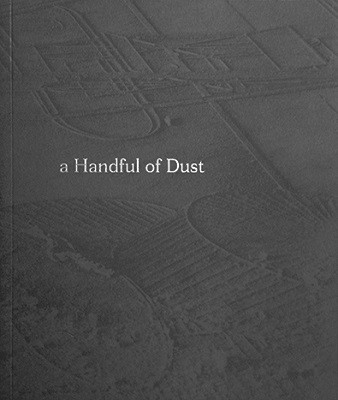
By exploring the various taxonomies of learning we outline ways in which photography teachers can remind themselves (and others) of what and how students are being taught in their lessons. By deliberate questioning in lessons we can draw attention to this vast range of skills and abilities, making the implicit explicit. There are certainly limitations to these taxonomies. They tend to suggest that learning is hierarchical - that students can't be creative, for example, until they have 'mastered' knowledge and understanding. It's important to be too literal in the interpretation of them. We are all aware that learning is complex, interwoven, iterative and cyclical in nature. We should not expect photography students to progress through the stages of Bloom's Cognitive Domain in any kind of logical sequence. We should not delay opportunities for students to be creative until we have instructed them in the whole history of photography. Likewise, an over-emphasis on writing or memorisation of facts, will not lead to greater Photo Literacy. We must resist attempts to limit photography. We must defend and celebrate the particular affordances of the visual, emphasise the importance of intuition, of feeling, of not knowing and unlearning. Students' breakthrough moments will be unpredictable. They may struggle with some aspects of the course (taking what seems like an inordinate amount of time to emerge from a particular threshold) but may take like ducks to water in other aspects of their programme of study. However, we hope that by outlining some of the ways in which educationalists have theorised about learning, by shining a light on taxonomies other than the cognitive, and by providing some ways in which teachers can use questioning and dialogue to draw out their students' learning, we can all better argue for our rightful place in the curriculum - right at the very heart! -- Jon Nicholls, Thomas Tallis School What follows is a very personal reflection on the books about art and photography that have really influenced my thinking and practice this year. These are the books I read (or re-read) in 2015 rather than just those that were published this year. They are in no particular order.
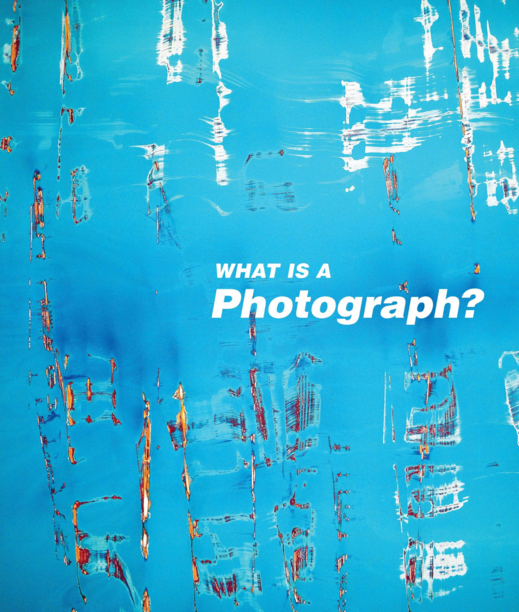
I have used Man Ray's image countless times with my A level photography students and I've created a variety of resources and provocations related to the ways in which we are still absorbed by the investigations and experiments initiated by Surrealism nearly 100 years ago. I'm really sorry that I was prevented from seeing the exhibition that accompanied the publication of this great book. However, it is beautifully illustrated throughout and contains a fantastic essay exploring the nature of photographs and their relationship to the times in which they are made. Related: A virtual flip through of the book A discussion with David Campany about the book
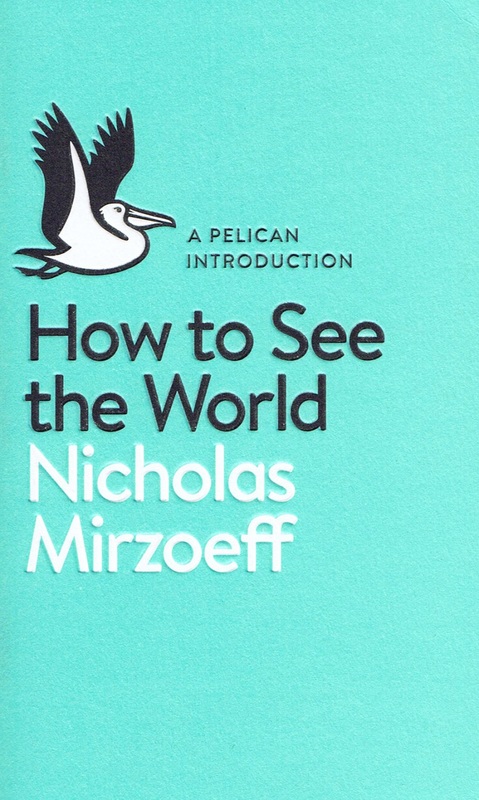
The book is large format and generously illustrated. Many of the artists included would be considered art photographers, exploring conceptual issues, but there is a strong sense of continuity with photography pioneers of the past. I've referenced some of the artists included in a recent scheme of work which explores the relationship between photography and surfaces. Who knows how long film and light sensitive papers will be around? Until such time as these technologies cease to exist, this crop of artists seem determined to wring the last drop of creative potential from a dwindling resource. Our students are fascinated by the darkroom, by film and old cameras. The department in which I work is also committed to analogue photography (for want of a better phrase) and both Freecycle and eBay (plus donations from neighbouring schools and colleges who are closing down their darkrooms and getting rid of equipment) have proved to be rich sources of cheap materials. I don't know how long we'll be able to continue to work in this way but this book is a useful reminder that many contemporary artists are still excited by the affordances of traditional materials and techniques whilst also questioning their relevance and meaning in the 21st century. Related: An introduction to the exhibition at the ICP How to See the World by Nicholas Mirzoeff
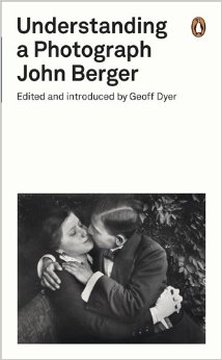
I'm determined to build into my teaching this year some of the many insights, questions and provocations about our relationships with photographic images raised by this book. Who knows, it may turn out to be as significant in our thinking about visual culture as John Berger's was all those years ago.
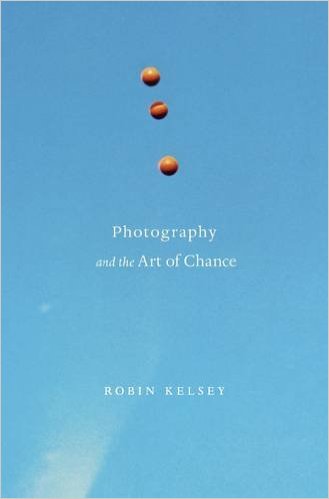
I'm also interested in teaching photography as both an art form in its own right (with its own particular set of affordances, constraints, techniques and processes) and as a form of contemporary art practice. In this respect, I am fascinated by the conceptual artists of the 1970s as much as I am by the early modernist pioneers of photography in the 20s and 30s. Robin Kelsey's brilliant book explores the different ways in which we can understand the role that chance plays for a number of photographers and artists, the main protagonists being William Henry Fox Talbot, Julia Margaret Cameron, Alfred Stieglitz, Frederick Sommer and John Baldessari. It's a brilliantly researched and illuminating journey that puts paid to the tiresome argument that photography teachers should concentrate on developing their craft and not be troubled by art. As Kelsey explains, art and photography have always been in dialogue: What binds the figures featured in the book is their self-conscious grappling with the relationship of photography to art. For each of them, this grappling required addressing the troublesome role of chance in photography, and each addressed this role in terms responsive to his or her day and circumstances. When Cameron practiced, Victorians were very concerned that modern markets were making investment akin to gambling, and she treated photography as a kind of aesthetic speculation. Stieglitz was more interested in the spontaneous accidental forms of vapors and clouds and scenes on the urban street. So, what are your favourite reads of 2015? Which books have inspired you to invent new projects or re-invigorated your own photography practice? Let us know in the comments below or, alternatively, why not write your own guest blog post? Get in touch!
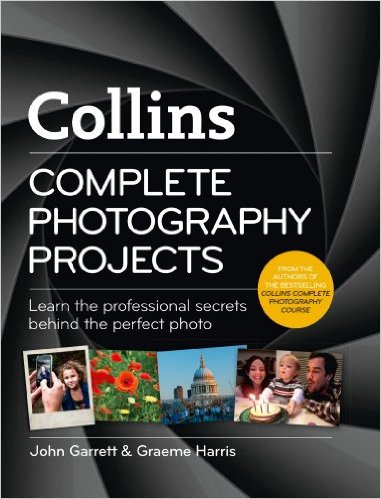
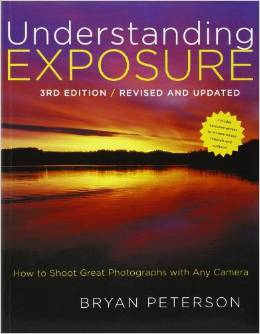
Damo Ward's blog is a fantastic resource for digital creativity and art related information. This is a guest blog post about his favourite photography books. When you’re looking at resources to help develop a new course or just out of personal interest, often you browse Goodreads or Amazon looking for that perfect book. As can be read in a previous post, I found websites that really helped me focus essentials for a GCSE Photography course. Looking across my bookshelf, I realised I had quite a few photography resources already. How do they compare with supposedly more ‘current’ information on the web? Here is a quick round up of my top five:
What would be in your Top 5 Photography teaching books?
The original version of this blog post appeared on Damo's blog. |
BlogGuest blog posts by members of the photography teaching and learning community. Archives
April 2023
|
 RSS Feed

A free resource by Jon Nicholls & Chris Francis.
|
DISCOVER |
CONNECT |
© PhotoPedagogy 2026 · Provided free and in good faith for educational purposes.